Cart
0
You may also like

If melatonin leaves you groggy, the first thing to check is dose and timing, not just the supplement itself. Many melatonin products contain far more than the small amount the body makes on its own, and taking it late can push its effect into your morning.
If melatonin still doesn't suit you, the most commonly studied alternatives are magnesium (glycinate), L-theanine, lemon balm, passionflower, chamomile and lavender, along with consistent light exposure and a calmer evening routine.
And if your real problem is a wired, racing mind at night, the better question may not be "What replaces melatonin?" but "Why won't my nervous system power down?"
I hear this a lot.
A woman can't sleep. She buys melatonin because everyone says it's natural. She takes it. And one of three things happens.
She falls asleep… and wakes up at 2 or 3 AM anyway.
She sleeps… but wakes up foggy, heavy and slow until noon.
Or nothing changes at all, and she lies there wondering what is wrong with her.
Nothing is wrong with her.
She simply tried to solve a nervous-system problem with a timing hormone.
Melatonin is often marketed like a sleeping pill. It isn't one.
Melatonin is a timing signal. As daylight fades, your brain begins releasing melatonin to tell your body: "Night is coming." It helps set your circadian rhythm — your internal clock.
What melatonin does not do is switch off a mind that is still in fight-or-flight. If your cortisol is high at night, if your thoughts are racing, if your body still feels like it's on alert, melatonin can be whispering "it's night" while your stress system is shouting "stay awake."
Think of it like the sun setting over a forest. The light changes. But if a storm is still blowing through the trees, the forest doesn't go quiet just because it's dark.
Your body naturally produces a small amount of melatonin at night. Many over-the-counter products contain doses that are considerably higher. More is not always better with a signaling hormone.
If you take melatonin at midnight and need to be up at 6, its effect may still be lingering when your alarm goes off.
Some people simply metabolize melatonin more slowly, or feel it more strongly. Grogginess, vivid dreams, headaches or a "hungover" feeling can all show up.
If your sleep problem is stress, anxiety, nighttime cortisol, hormonal shifts or a busy mind, melatonin may be addressing the wrong layer.
Before I talk about any supplement, I want to know what kind of sleep problem you have.
| If this sounds like you... | It makes me want to ask about... |
|---|---|
| You can't fall asleep; your mind races | Nervous-system activation, evening cortisol, screens, stress load |
| You fall asleep but wake at 2–4 AM | Blood sugar, nighttime cortisol, hormonal shifts |
| You sleep but wake exhausted | Sleep quality, breathing, iron, thyroid, recovery |
| Your sleep worsens before your period | Cyclical hormone changes |
| Sleep changed in your late 30s or 40s | Perimenopause |
| You feel tired but wired at night | A stress system that won't downshift |
This table does not diagnose you. It helps us find the right next question.
Magnesium plays a role in muscle relaxation and nervous-system function. I prefer glycinate because it is gentle on the gut and well tolerated. Many women notice it most as physical relaxation: less tension, less restlessness.
An amino acid naturally found in tea. L-theanine is associated with a calm-but-clear state rather than sedation, which is exactly why I like it for the woman whose body is tired but whose mind won't stop.
A gentle herb from the mint family that has been used for centuries for restlessness and sleep.
Traditionally used for anxious, overactive minds. Research is still developing, but it is one of the botanicals most often studied for sleep and nervous tension.
More than a bedtime tea cliché. Chamomile contains apigenin, a compound studied for its relaxing effects.
Studied both as an aromatherapy oil and as an oral preparation for anxiety and sleep quality.
A traditional herb I use often for a "buzzing" nervous system. It is studied for its calming activity in the brain.
Important: "Natural" does not mean "right for everyone." Herbs can interact with medications, including antidepressants, sedatives and blood pressure medications. Check with your healthcare provider, especially if you are pregnant, breastfeeding or taking prescription medications.
These are the ones women skip. They are also the ones that often matter most.
Your melatonin rhythm starts in the morning. Bright outdoor light within an hour of waking helps your body know when night should come later.
Your nervous system needs a transition, not a cliff. Dim lights, quieter conversations, warm shower, slower breathing.
If you wake at 3 AM wired and hungry, blood sugar may be part of the story.
Same bedtime. Same wake time. Even on weekends, as much as real life allows.
Caffeine can stay in your system much longer than you think.
When I was sick with dysautonomia, there were months when I was fainting many times a day. Sleep wasn't simply "bad." My entire nervous system felt like it had forgotten how to feel safe.
I learned the hard way that you can't force sleep onto a body that believes it is in danger. You have to teach the body it's safe enough to rest. That changed how I think about every sleep supplement I recommend.
I want to be completely transparent here.
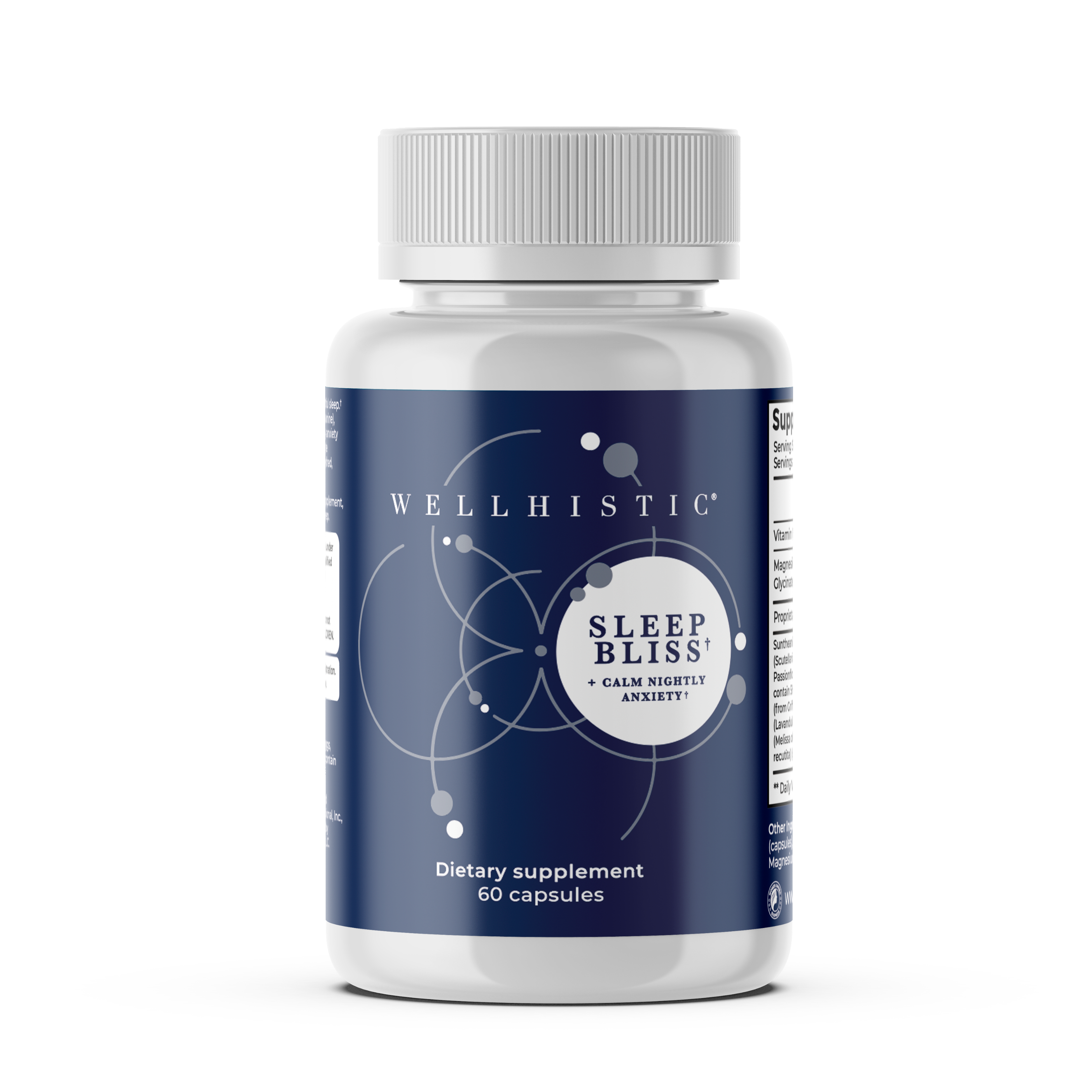
My nighttime formula, Sleep Bliss™, does contain melatonin (3 mg), alongside magnesium, B6, L-theanine, Baikal skullcap, passionflower, 5-HTP, lavender, lemon balm and chamomile. I formulated it as a full sleep-architecture formula, not a melatonin pill — but if you already know melatonin doesn't agree with you, it isn't the formula I would start you with.*
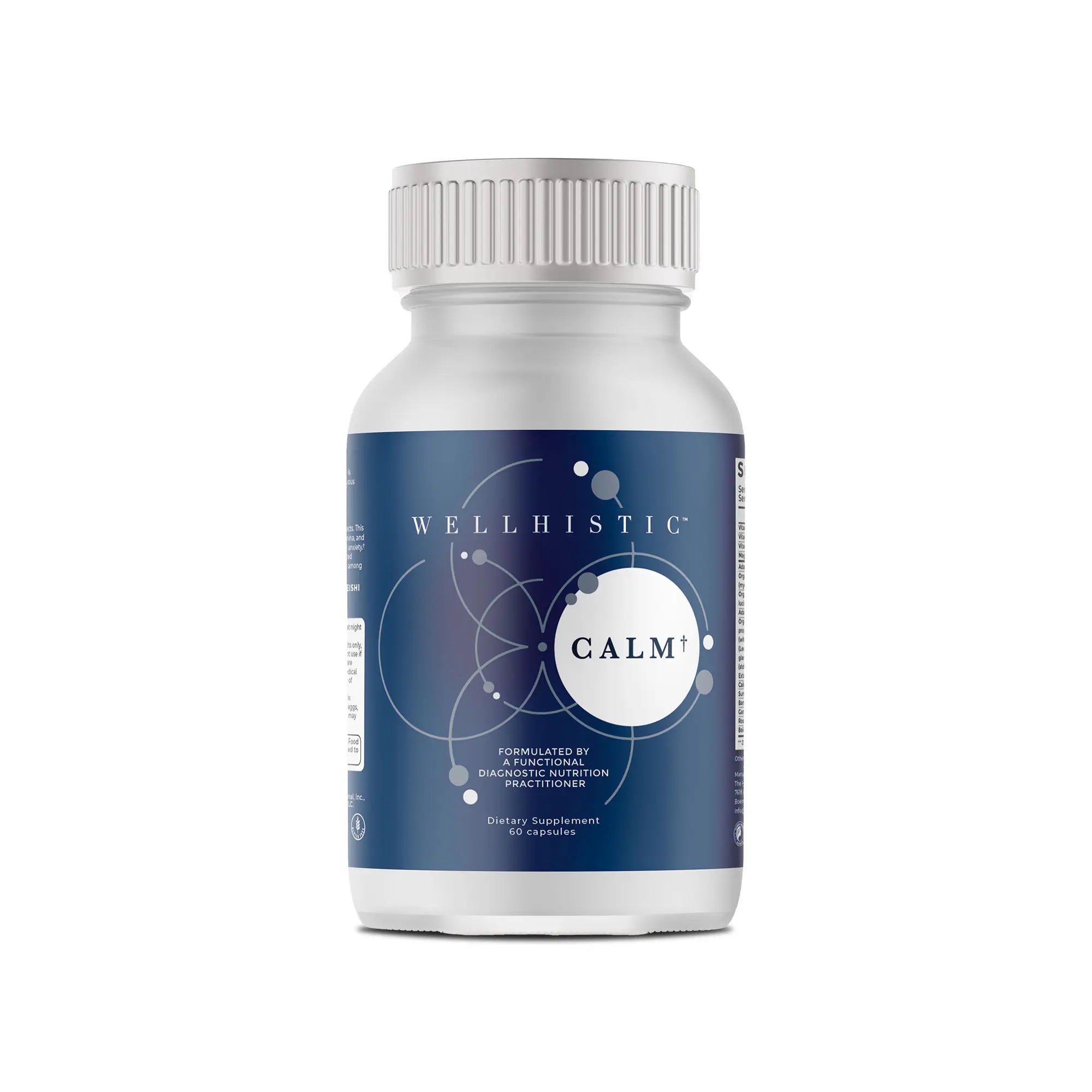
For the woman who wants a melatonin-free evening option, I look to CALM™. CALM combines magnesium glycinate, L-theanine (Suntheanine®), lemon balm, Baikal skullcap and GABA with adaptogens such as ashwagandha and holy basil. I designed it to support a calmer stress response, and many of my clients take a dose in the evening as part of their wind-down.*
CALM contains licorice root, so if you have blood pressure concerns, speak to your provider first.
Not sure which one fits you? Take the Wellhistic Wellness Quiz.
Nights 1–7:
Track:
After a week, you have information, not guesses.
Journal prompt: What does my body need to feel safe enough to rest tonight?
Grogginess can come from a dose higher than your body needs, taking it too late in the evening, or individual sensitivity. Adjusting dose and timing with your provider is often the first step.
There is no single best alternative. Magnesium glycinate, L-theanine and calming herbs like lemon balm, passionflower and chamomile are among the most commonly used. The right choice depends on whether your issue is falling asleep, staying asleep or a racing mind.
Many people use magnesium as part of their evening routine. It works differently from melatonin, supporting relaxation rather than acting as a timing signal.
Melatonin is widely used and generally considered low risk for short-term use in adults, but it doesn't suit everyone and can interact with some medications. Ask your provider whether it fits your situation.
Melatonin may help with sleep onset, but middle-of-the-night waking is often linked to other factors such as blood sugar, stress hormones or hormonal changes.
If melatonin leaves you groggy, you haven't failed at sleep. You may simply need a different key for a different lock.
Start by asking: Is my problem timing, or is my nervous system still on alert? Then choose your support accordingly.
Rest is not something you force. It is something you invite.
TO YOUR INVISIBLE BATTLES AND UNSEEN STRENGTH.
*These statements have not been evaluated by the Food and Drug Administration. This product is not intended to diagnose, treat, cure or prevent any disease.
This article is for educational purposes only and is not a substitute for individualized medical advice. Do not start, stop or change any medication without your healthcare provider. Supplements are not intended for use during pregnancy or breastfeeding unless approved by your provider. Persistent insomnia, loud snoring, breathing pauses during sleep or severe daytime sleepiness should be evaluated by a qualified healthcare professional.

Carola Le-Wriedt, faced severe dysautonomia/POTS symptoms, leaving her bedridden and wheelchair-bound. Traditional Western medicine offered no clear solutions, so She embarked on a global quest for answers.


*These statements have not been evaluated by the Food and Drug Administration. These products are not intended to diagnose, treat, cure, or prevent any disease.
Your cart is empty
Let's find what your body needs.
 Not sure where to start?Take the 5-minute quizGet your personalized plan →
Best sellers
You may also like
 30-Day PMS & Perimenopause Reset Kit$487.00
→
 30-Day Menopause Reset Kit$487.00
→
 THE POWERFUL GUT HEALTH & PARASITE DETOX BUNDLE$169.99
→